
Credit unions can reduce communication costs while enhancing member engagement
Digital transformation is essential to your credit union’s success, especially in today’s environment where organizations face increased competition, evolving member expectations, and downward pressure on budgets. To serve more members with lower operational costs, successful digital adoption is key. One of the best ways to encourage digital adoption is to enhance member communications.
But enhancing member communications often means sending more communications, and estimating the cost of this increase can be challenging. CCM vendors typically charge per communication, which means the more successful you are at communicating with members, the more you spend. This can create a situation where you become a victim of your own success, as your digital adoption initiatives deliver way above expectations, meaning your digital volumes skyrocket and your communication budget is blown.
That’s a lot of paper! And although there will always be a role for paper in healthcare communications, it does come with an increased operational cost and slower delivery timelines. That’s why it just makes sense to maximize the paperless adoption rates of healthcare communications.
Healthcare providers of all types are exploring how to increase their paperless adoption rates, as the industry continues to digitalize. Recent research by Keypoint Intelligence reveals which tactics healthcare providers feel have been most successful at promoting paperless adoption in healthcare. The results are:
 In two years, the percentage of digital only customers is expected to increase to 36%, at the expense of the print only percentage, which declines to 31%. But the number of double dippers is expected to remain the same.
This means credit unions must either adjust communication budgets to accommodate double dippers or find innovative ways to encourage them to go fully paperless.
In two years, the percentage of digital only customers is expected to increase to 36%, at the expense of the print only percentage, which declines to 31%. But the number of double dippers is expected to remain the same.
This means credit unions must either adjust communication budgets to accommodate double dippers or find innovative ways to encourage them to go fully paperless.
- Hospital respondents (the largest group in the healthcare segment) mostly cited having an effective multichannel marketing strategy as key to successful adoption, while making it easy for patients to switch was a close second.
- For doctor’s office or outpatient clinic respondents, making it easy for patients to switch was first, while providing a better patient experience and setting realistic goals tied for second.
- All the revenue cycle management respondents said a better patient experience was a key reason for successful adoption, but also mentioned the need to focus on educating patients on the benefits of paperless adoption.
Doxim’s member communication experts can also help you encourage paperless adoption and consult on creative communication design that both promotes engagement and delivers a great user experience. BOOK A DEMO
THE DOUBLE DIPPER DILEMMA
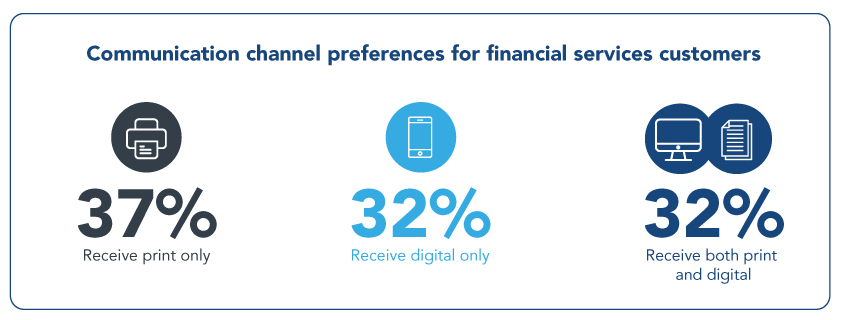
There is another risk relating to increasing digital adoption. What if members agree to receive digital communication, but do not agree to go fully paperless? These ‘double dippers’ want the convenience of digital communication but are not yet willing to let go of the familiarity of receiving an envelope in the mail. In traditional vendor pricing, this would mean a doubling up of messaging costs. Your credit union achieves no cost saving on postage, but must add the cost of each digital communication. Communicating with these members costs more than those that are on print only, because you are paying for both print and digital communications. A Keypoint Intelligence report reveals that when it comes to financial services customers, over a third (37%) receive print only, a third (32%) receive digital only, and the remaining third (32%) receive both. This doubling up of costs, while positive for your omnichannel communication strategy, could be catastrophic for your budget. Based on research by KeyPoint Intelligence.
In two years, the percentage of digital only customers is expected to increase to 36%, at the expense of the print only percentage, which declines to 31%. But the number of double dippers is expected to remain the same.
This means credit unions must either adjust communication budgets to accommodate double dippers or find innovative ways to encourage them to go fully paperless.